
What AI interview scheduling actually does
Much of what’s sold as AI interview scheduling is automation you can inspect: rules that start scheduling when a candidate changes stage, an algorithm that picks times and balances interviewer load, and suggestions when someone drops out. Here’s what each layer does, what ModernLoop automates today and what to ask any vendor.
Short answer
AI interview scheduling is software that books interviews with little or no coordinator effort. It usually combines three layers: rules that start scheduling from ATS stage changes, an algorithm that finds times and balances interviewer load, and, in some products, an agent that acts on plain-language requests. Ask which layers a vendor ships today.
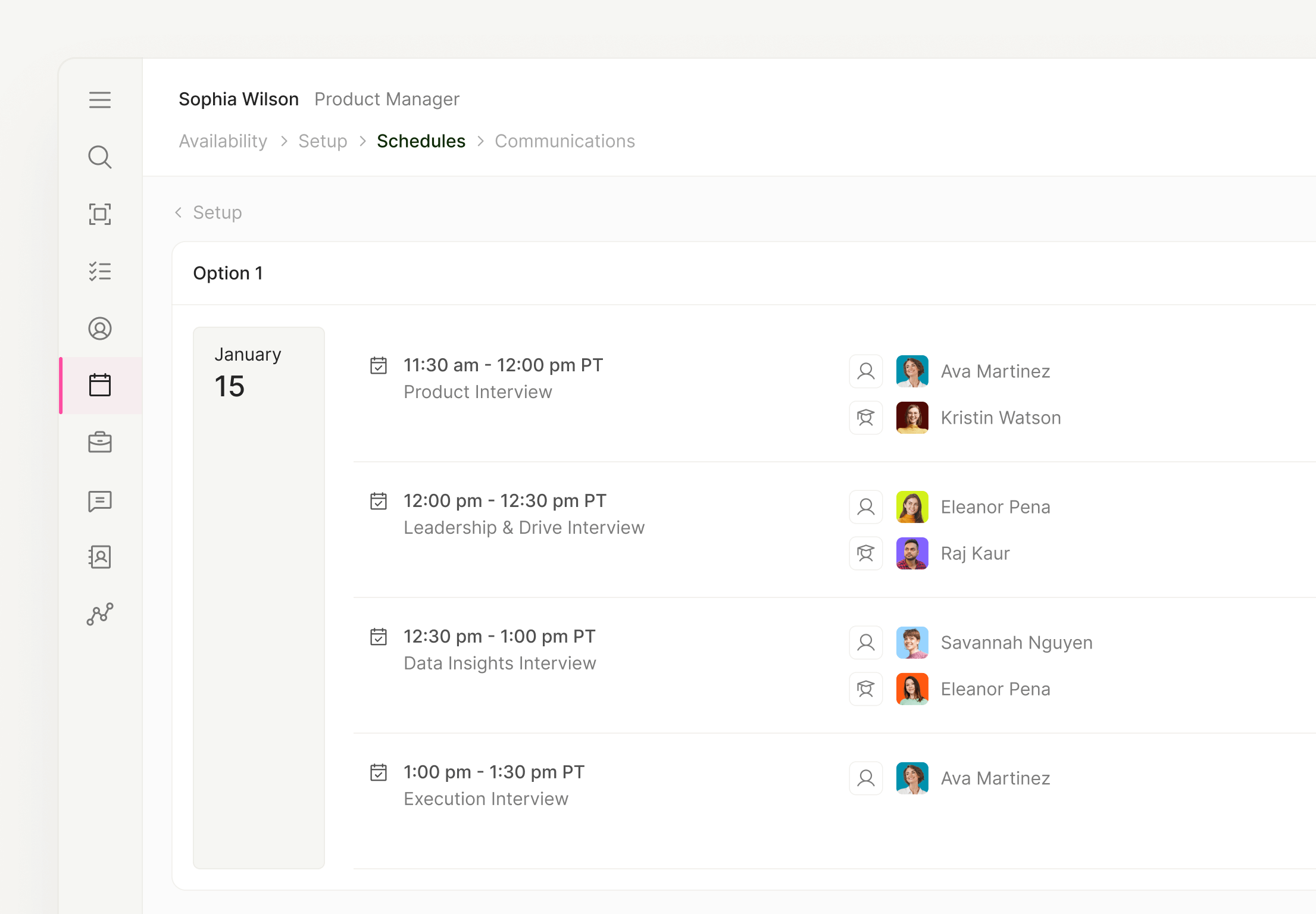
Three things vendors mean by “AI”
In interview scheduling, “AI” covers three very different kinds of software. All three can be useful. Only one of them acts on decisions you haven’t written down.


Looking for AI that runs screening interviews instead? That’s a different product: Taylor AI, ModernLoop’s AI recruiter, interviews candidates 24/7, at any volume.
What buyers hear as AI interview scheduling, and what it actually does
Bring this table to your next call with any AI interview scheduler vendor. A good answer is one you can check on your own calendars.
| What buyers hear | What it actually does | What to ask a vendor |
|---|---|---|
| “Zero-click” or “automated” scheduling | Rules-based automation. An event in your ATS, usually a stage change, sends the interview request, a scheduling link and the candidate email. | Which ATS events can trigger it? Can rules differ by job, stage or interview type? What happens when a candidate doesn’t respond? |
| “AI finds the best time” | Optimization. An algorithm searches calendars for times that fit the candidate, every interviewer, time zones and working hours, then proposes options. | Which constraints does it weigh? Does it propose several schedules or just one? Can a coordinator edit the result before it’s sent? |
| “Smart load balancing” | Rules plus optimization. Limits on how often each person interviews, applied while the algorithm picks interviewers from those qualified for the session. | Can we set limits per person and per team? Can we see who is close to their limit before we book? |
| “AI rescheduling” | The search, run again. When someone declines, the tool looks for a replacement interviewer or a new time, then suggests it or books it. | Does it suggest or act? Who approves a change the candidate will see? Does the rest of the loop stay where it is? |
| “AI recruiting coordinator” or “AI scheduling agent” | An agent. A language model reads plain-language requests, such as a candidate’s email or a recruiter’s chat message, and takes actions: proposes times, books, reschedules. | Which actions can it take without a person? What does it do when it’s unsure? Can we see a log of everything it did? |
| “AI scheduling agent with human oversight” | An agent with approval steps. The agent drafts; a person approves before anything reaches a candidate or a calendar. | Where are the approval points, and can we set them per role or region? Who can override, and is every override recorded? |
This table describes the category, not any one vendor. Ask every vendor to show each capability live, on your calendars and your ATS stages.
What ModernLoop automates today
Rules and optimization you can inspect, built for enterprise interview loops.


ModernLoop and AI



Rules you control, triggered by your ATS.
As candidates move stages in your ATS, Zero Click Scheduling sends interview requests and scheduling links automatically. Candidate emails appear to come from the recruiter or hiring manager.
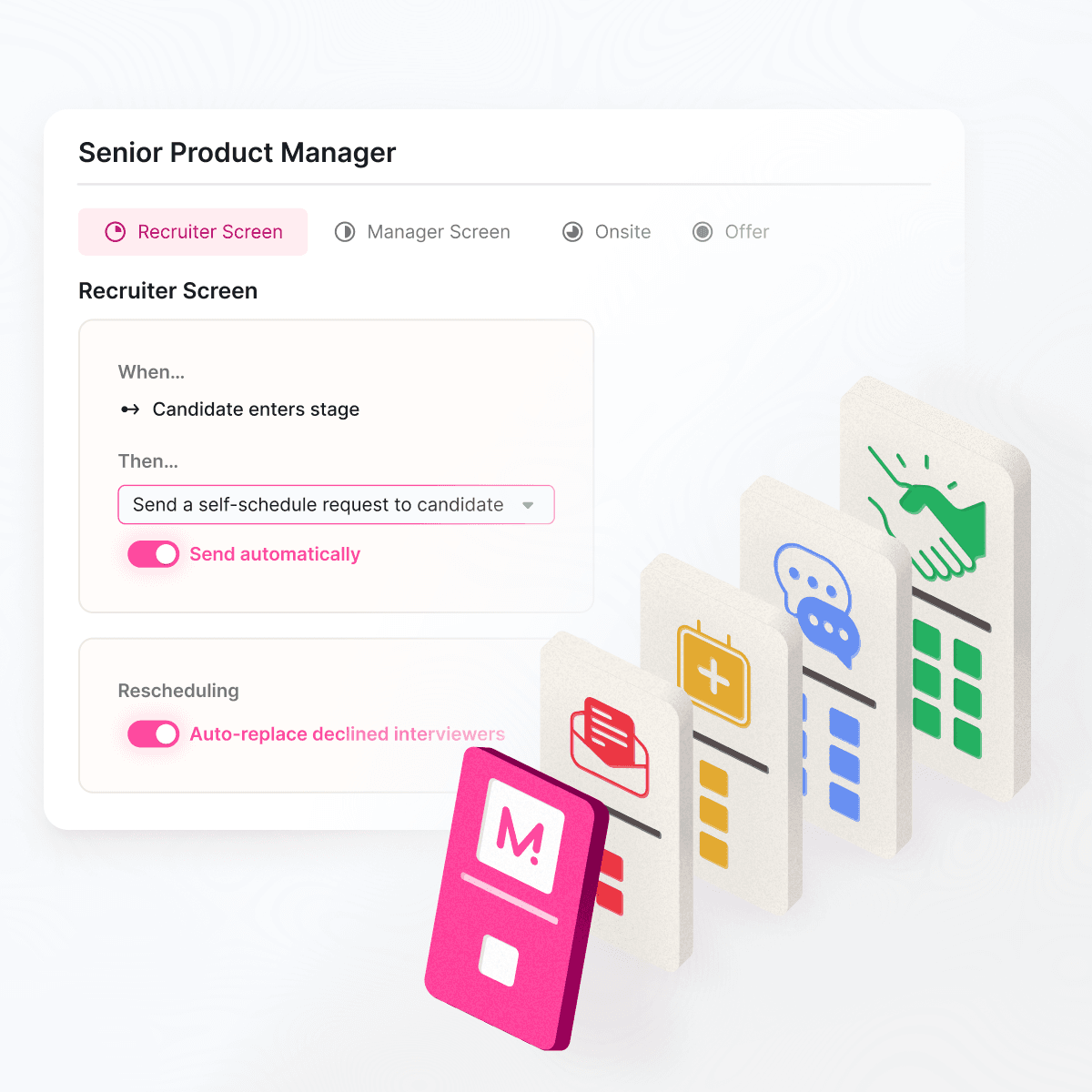

Constraints that protect your interviewers.
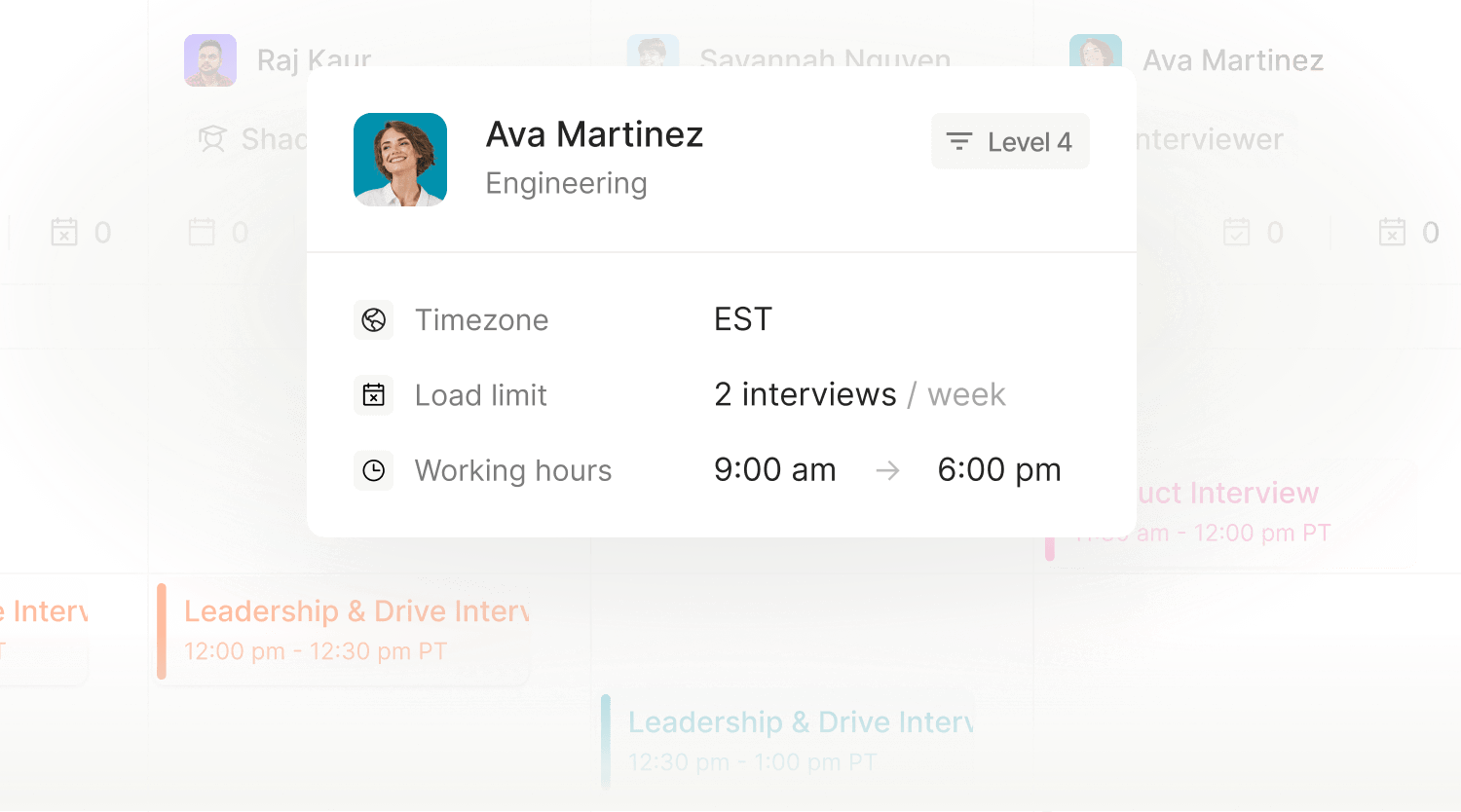
Interviewer profiles hold each person’s time zone, work hours, department, seniority and training level. ModernLoop finds available slots for each interviewer and balances interviewer load to prevent burnout.
Who approves what: AI scheduling agents with human oversight
Whether you buy rules, optimization or an AI scheduling agent, decide where people stay in charge before anything goes live. Here’s the split we recommend to enterprise teams: automation does the searching and the sending, and coordinators stay in control of the rules and the exceptions.

More on scheduling automation

Where scheduling automation sits in the recruiter value chain, and what it changes in a coordinator’s week.

How multi-interviewer loops get scheduled across time zones, interviewer pools and reschedules.

Criteria for comparing interview scheduling tools as an enterprise team.